
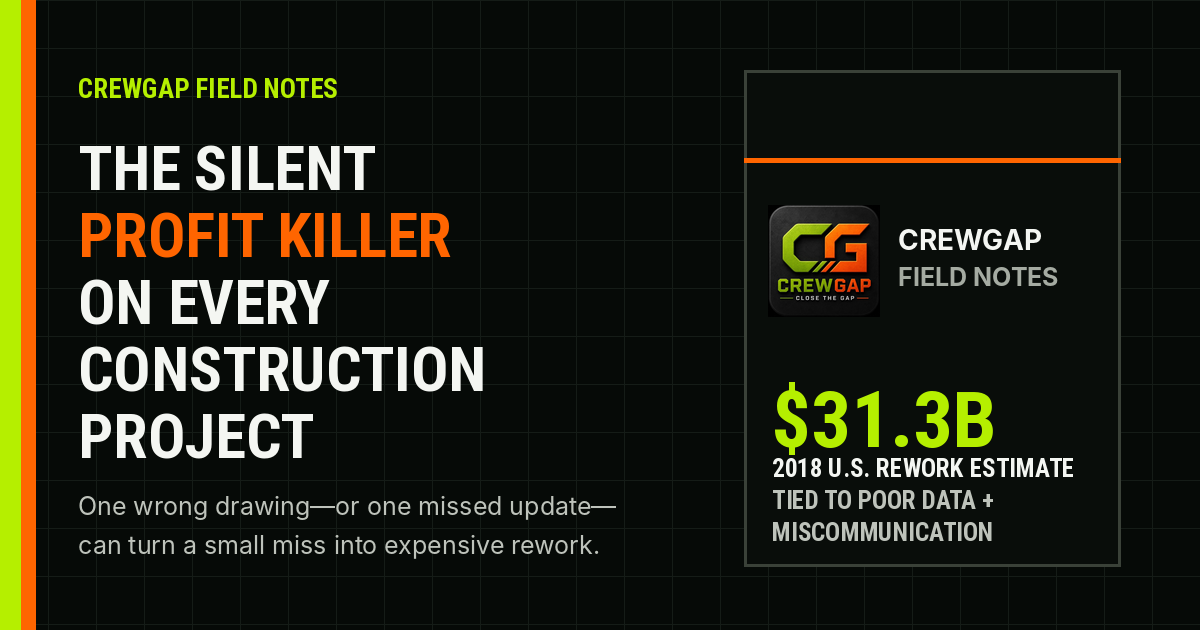
Good people lose money on construction projects because the right information does not reach the right person at the right time. The failure may start with an old print, an unconfirmed update or a field issue that disappears after a phone call.
The small mistake nobody worries about
An installer working from an outdated drawing may first appear to cause only a minor material correction and a few labor hours. But someone must stop, confirm the change, update the plan, remake material and coordinate everyone affected by the interruption.
The direct cost is rarely the whole cost. A foreman leaves productive work, another trade waits, a delivery moves and the daily plan changes. More importantly, the same process that allowed one old drawing to remain in circulation can allow another.
When the wrong information reaches a whole crew
Scale the same problem to a ten-person crew. Material is installed, hangers are set and equipment moves into place before the issue is discovered. The correction becomes demolition, replacement material, overtime, schedule recovery and a dispute over who owns the cost.
Every person may have done exactly what they were told. The office received the revision, the project manager saved it, the foreman printed what was available and the crew installed from the sheet in front of them. The company still loses because the handoff failed.
Rework does not stay in one line item
Rework consumes labor budgeted for new installation, interrupts production and forces supervisors to manage problems instead of planning work. It may hold up inspections, delay other trades and damage relationships with the general contractor or owner.
Research published by PlanGrid and FMI estimated that poor project data and miscommunication were responsible for a large share of U.S. construction rework in 2018. Those figures are historical estimates, but the operational pattern remains familiar: people spend time searching, resolving conflicts and repairing work that a clearer handoff could have prevented. Review Autodesk’s discussion of the research →
More messages do not guarantee better communication
Construction teams communicate all day through calls, texts, group chats, emails, meetings, photos, notes and shared drives. The problem is often not a lack of conversation; it is that the information is scattered.
A dependable system should let the people doing the work answer four questions quickly:
- What changed?
- Which information is current?
- Who needs to act?
- Was the change received and understood?
The foreman should not be the entire system
Experienced foremen carry enormous operational knowledge. That experience is valuable, but it should not be the only place the company’s current plan exists. When information depends on one person’s memory, the company becomes vulnerable when that person gets busy, changes projects or leaves.
Good visibility lets field leaders lead crews instead of reconstructing yesterday’s conversations and chasing paperwork.
What a better handoff looks like
- Make current information obvious. People should not compare file names or search message threads to decide which drawing is correct.
- Connect changes to the work. Tie the revision to the job, affected people and required action.
- Keep a record. Daily reports, issues, files and decisions should remain available after a call ends.
- Confirm receipt. Uploading a document is not the same as making sure the field received it.
- Design around the field. A process that slows crews down will eventually be bypassed.
Why CrewGap focuses on the operational handoff
CrewGap is built to keep jobs, crews, time, reports, equipment and field information connected. Software cannot eliminate every mistake, but it can make current information easier to find, inconsistent information easier to spot and the field-to-office handoff harder to miss.
Protect the handoff
The next expensive mistake may not begin with poor workmanship. It may begin with a file that was never updated, a question that was never answered or a change that was never confirmed. Treat communication as a financial issue before rework appears on the cost report.